


Designing a Supportive Entryway for Your Family

How to turn your home’s threshold into a calm, functional welcome.

The entryway is the first and last space your family passes through each day. It sets the tone — not just for guests, but for you. When this space works well, mornings feel smoother, evenings unwind more easily, and transitions in and out of the home carry less friction.
Here’s how to design an entryway that supports your family in both function and feeling.
1. Start with flow
Before adding a single hook or basket, notice how everyone actually moves through the space.
Where do shoes pile up?
What’s dropped first when someone walks in the door?
Where does light hit in the morning and evening?
The goal is to support your family’s real habits, not idealized ones. A supportive entryway aligns with how life already happens — then gently improves it.
2. Define the essentials
A functional entryway only needs a few hardworking zones:
Drop zone: a small tray, bowl, or drawer for keys, mail, and earbuds.
Outerwear storage: wall hooks, a small rack, or a slim cabinet depending on space.
Footwear area: a low shelf or mat that defines where shoes belong.
If you have kids, consider a lower hook or cubby at their height so everyone participates in keeping order.
3. Use furniture with intention
Even a narrow hallway can benefit from a slim console, wall-mounted shelf, or bench.
A bench anchors the space and encourages a pause — to tie shoes, take a breath, or drop a bag.
A mirror by the door reflects light and gives a quick visual check before leaving.
A console or floating shelf offers surface area without visual clutter.
Choose pieces that feel proportionate and purposeful; in small spaces, every inch earns its place.
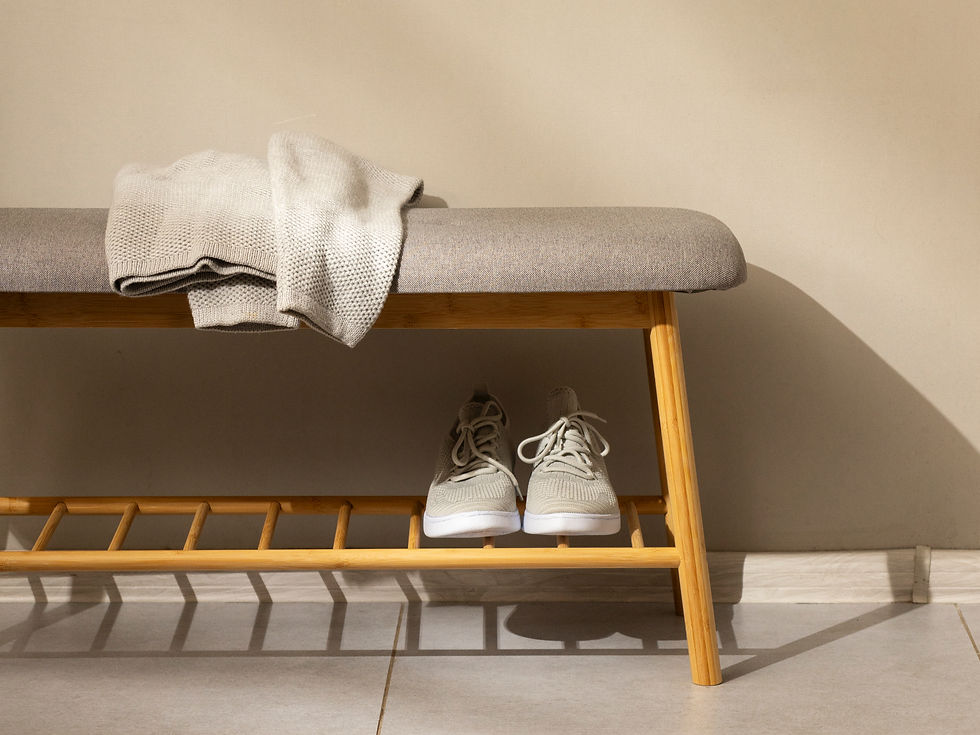
4. Layer calm through texture and tone
The entry sets emotional rhythm. Soft lighting, a runner rug, or natural textures (wood, rattan, linen) help the nervous system shift gears.A touch of warmth — a framed family photo, plant, or art piece that makes you exhale — reminds everyone this is home, not just a passageway.
5. Build easy systems
Simplicity is sustainable. Label baskets, keep hooks consistent, and use trays to contain visual noise. A supportive space doesn’t demand perfection; it just makes the next right action obvious.
6. Keep it light
Because this area bears the brunt of daily life, clutter builds quickly. Try a five-minute reset every evening — shoes in place, mail sorted, lights dimmed. The next morning begins from a steadier place.
A small shift with big impact
A supportive entryway doesn’t require renovation — just observation, a few key choices, and a commitment to clarity. It’s one of the simplest ways to make your home feel more intentional.
When your entryway flows, your day flows.


